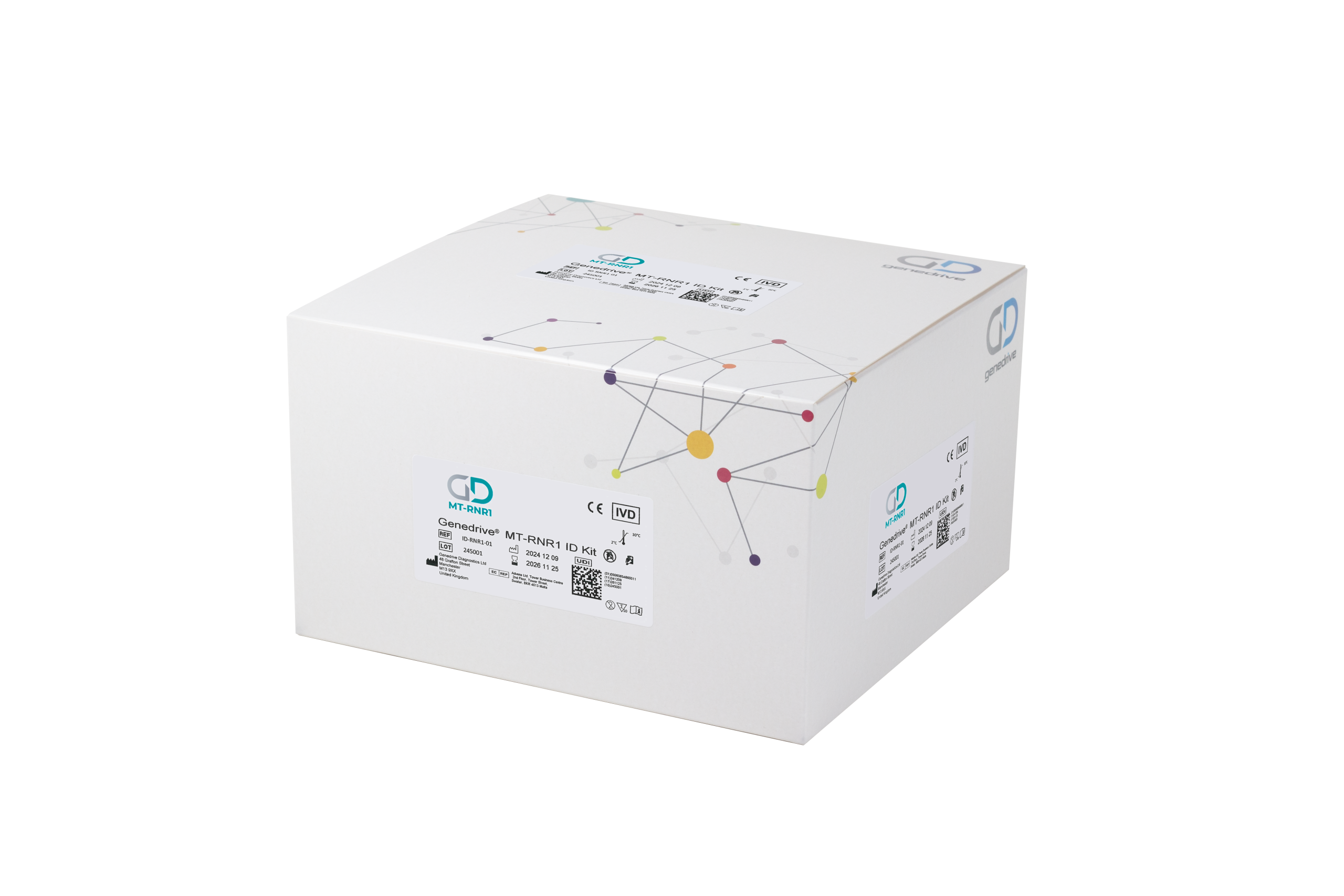

The specialist NICE EVA committee collected evidence regarding technical, clinical, economic and social impact of the Genedrive® MT-RNR1 ID Kit and concluded that:
- the Genedrive® MT-RNR1 ID Kit can quickly and accurately identify babies with the primary genetic variant who may be at risk of hearing loss if given aminoglycoside antibiotics.
- there is currently no test available in the NHS that provides results quickly enough to inform decisions on antibiotic prescribing in emergency care.
- the long-term savings to the NHS associated with hearing loss and fitting cochlear implants could be substantial.
- aminoglycoside-induced hearing loss has a major negative impact on the quality of life of children and their families.
NICE’s final guidance on the Genedrive® MT-RNR1 ID Kit will follow a public consultation period which opens today, 9 February and closes on 21 February 2023. The final recommendations will be the basis for NICE’s early value guidance on using the Genedrive® MT-RNR1 test in NHS England alongside additional data generation.
Further information can be found at (please note this link will go live later today): Consultation | Early Value Assessment: Genedrive MT-RNR1 ID Kit for detecting single nucleotide polymorphism m.1555A>G in neonates | Guidance | NICE
David Budd, CEO of genedrive plc, said: “We are delighted with the enthusiastic and positive engagement of the NICE specialist review team and encouraged by this draft stage recommendation from the EVA programme. We encourage relevant stakeholders to participate during the public consultation period to support our pioneering work, and look forward to receiving the final NICE report and recommendations for the world’s first rapid point-of-care genetic test used to influence neonatal management in an acute care setting. The timely publication of the NICE guidance is an important outcome that we expect will facilitate further uptake and adoption of the test by NHS England.”
(1) Further Information on the EVA Programme
NICE’s new EVA programme engages clinicians and developers around innovative technologies that because of recent introduction, still have their real-world evidence base developing. The new EVA process allows for a recommendation for use in the NHS while real world data collection continues. The new EVA programme means that patients can benefit from promising new products sooner. The outcomes of a NICE review can be (i) to conditionally recommend use while further data is collected, (ii) that a product should be used for research only, or (iii) a product is not recommended.
The Genedrive® MT-RNR1 ID Kit, selected as 1 of the 10 EVA pilot projects, is the world’s first commercial point-of-care genetic test for emergency care. It helps to avoid irreversible lifelong hearing loss in specific infants exposed to aminoglycosides by rapidly detecting the m.1555A>G gene variant that can cause lifelong deafness, allowing for alternative antibiotics to be prescribed. Product information can be found at: https://www.genedrive.com/assays/rnr1-product.php